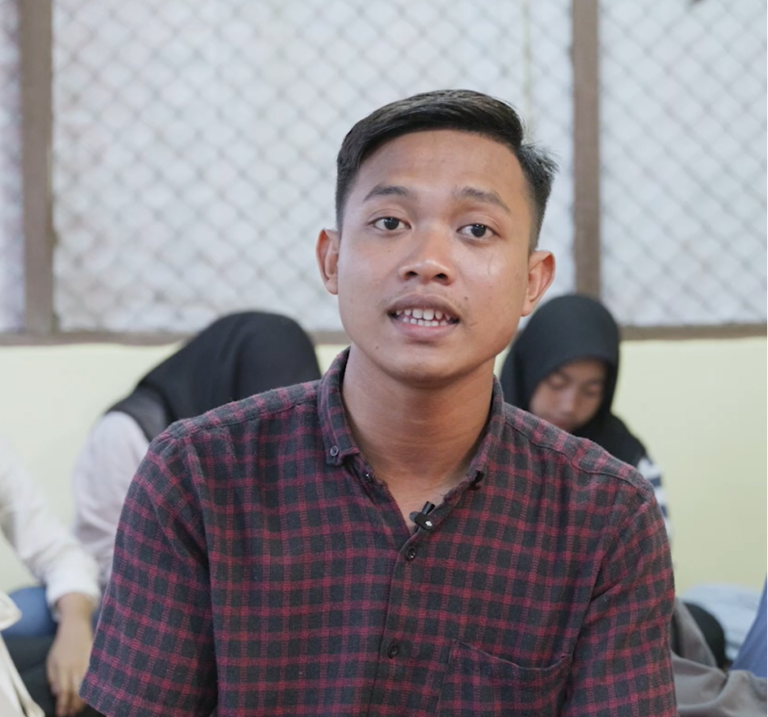
I am more than just a discarded plastic bottle. My name is now Wayang Botol, and I have become the voice of change.
I was born from the hands of village children in Central Lombok—children whose voices were once barely heard, but who have now become pioneers in the movement to prevent child marriage through art and culture.
It all began in 2022, when the voices of village children were gathered through the Village Children’s Forum (FAD) and PATBM (Community-Based Integrated Child Protection). They were young, full of spirit, and tired of seeing their peers marry too early. They didn’t have a stage, so they created one—together with me.
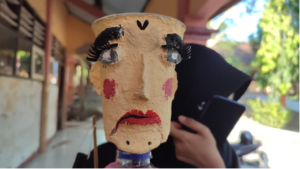
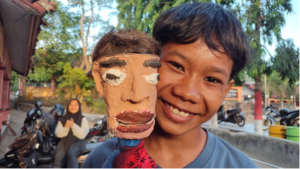
I am crafted from discarded plastic bottles, straws, and cardboard—trash that was once thrown away, now transformed into an educational tool. “Wayang Botol is more than just a campaign tool,” says Syafrudin, the YGSI District Coordinator in Lombok for the Power to You(th) program. He is usually called Bang Ote. “It is also a symbol of our response to climate change—waste turned into art.”
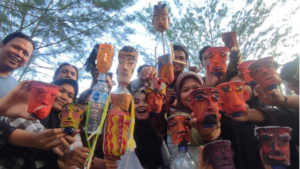
We perform from hamlet to hamlet, from schools to village halls. “We have performed more than 40 times,” Bang Ote continues. “And every time we perform, the community is enthusiastic; they laugh, they cry, and they go home with a new perspective.”
We carry stories about violence, teenage pregnancy, and dreams delayed because of child marriage.
Those Who Make the Bottles Speak
Children like Miza (17) and Elma (16) are my directors and lead performers. They write the scripts, scavenge for bottles, and assemble me late at night under dim lights. “I used to think that after graduating middle school, I’d just get married,” Miza says. “But after joining the FAD, I realized there is another life I can fight for.”
Elma adds, “I am proud to have performed at the Regency-level Musrenbang (Development Planning Deliberation), sitting in the same room as the Regent. Children like us can finally speak.”
The village government is supportive; they have even allocated village funds for the FAD. “This is extraordinary,” says Pak Zainuddin, the Head of Tumpak Village. “The children aren’t just talking; they are working. And we are listening.” Through regulations like Perbup 115/2021 and Village Regulations on Child Protection, the village provides both space and legitimacy.
Religious figures like Pak Zudin, a local teacher and preacher, have also joined the cause. “I used to be alone. But now there is a shield: there is the FAD, there are Village Regulations, and I am no longer on my own,” he says. He spreads the message through Friday sermons, supporting the delay of early marriage and the importance of education.
From Performance to Real Change
We are more than just a show. In the intervention schools, there hasn’t been a single case of non-consensual sharing of intimate images or child marriage since 2022. “There used to be such cases in the middle schools and madrasas. But since the intervention, there have been zero cases,” says Bang Ote.
What touches my heart the most? It’s when Miza says, “My parents used to worry if I came home late. But now, they know I’m coming home from Wayang Botol practice—and they are proud.” Or when Pak Zudin tells his congregation, “If our children want to marry, we must guide them toward choosing education instead of early marriage.”
Fighting the Current of Tradition
Not everything has been easy. The culture of pembelasan still exists—where a young girl is “whisked away” to be married. But now, whenever news of a sudden marriage breaks, the FAD moves quickly, coordinating through WhatsApp groups, reporting to the village office, the community leaders, and the parents. We haven’t been able to change everything yet, but we are starting here.
We—the children, the teachers, the religious figures, and I, the Wayang Botol—have become witnesses to change. A village that was once silent now has a voice. That voice is me. An empty bottle, now filled with meaning.
“This Wayang Botol is not just about education; it is a symbol that change can come from the hands of children, using a cultural approach that touches the heart,” Bang Ote concludes. (*)