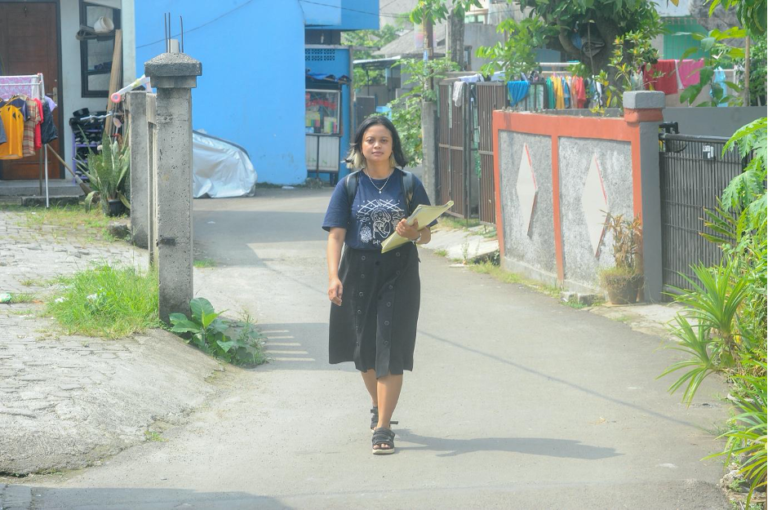
In the small village of Sindang, located in the Indramayu Regency of West Java, a young woman named Agni is carving a path toward meaningful change. Indramayu is often recognized for its complex social challenges, particularly for young women: limited access to information, health services that are rarely youth-friendly, and deeply rooted social norms that often restrict women’s active participation in society.
It was within this challenging reality that Agni emerged as a transformative figure. She has evolved from a program beneficiary into a dynamic mobilizer, now serving as an inspiration for countless other young people in her community.

“I was raised in Indramayu. Initially, I thought this was all there was to life. But after joining these activities, I realized the world is much larger than I ever imagined.”
The First Steps: Selendang Puan and SAPA Institute
Agni’s journey began when she joined Selendang Puan Indramayu, a community of young women dedicated to health and reproductive rights. This community is part of a network coordinated by the SAPA Institute and supported by Yayasan Gemilang Sehat Indonesia (YGSI) through the Right Here Right Now 2 (RHRN2) program.
Through this platform, Agni participated in training, coaching, and mentoring sessions that broadened her perspective. She mastered the SAPA modules, developed communication strategies, and deepened her understanding of the socio-cultural context of the Indramayu community.
“The strategy is to blend in with the community. We first study their character, their language, and their habits. We want to be accepted first, because once trust is established, only then can we start a conversation about change.”
Merging with the Community, Building Trust
Agni chose a non-preachy, grassroots approach. She began appearing in community spaces, building authentic relationships with teenagers, parents, and community leaders. Slowly but surely, she shifted the public’s perception of sexual and reproductive health—transforming a once-taboo subject into a topic for open discussion.
“It used to be that the community health center (Puskesmas) was only for those who were sick or pregnant. Now, young people go there just to talk. Even the doctors are more open and approachable; they aren’t as rigid as they used to be.”

Real Change in the Indramayu Region
Together with the Selendang Puan Indramayu community and the SAPA Institute team, Agni has become an integral part of a grassroots movement sparking significant social change in her region. One of the most tangible impacts is the increased access for adolescents to health services, particularly regarding counseling and information on sexual and reproductive health. While these topics were once considered taboo and difficult to discuss, young people now feel safe and comfortable asking questions, engaging in discussions, and seeking assistance.
This transformation is also evident within the local health centers (Puskesmas). Previously, these centers were known only as places for the sick or for maternal care. However, through the community-based approach led by Agni and her team, Puskesmas are now opening inclusive spaces for dialogue with young people. Health workers have become more approachable, communicative, and active in collaborating to provide relevant education for adolescents.

On the other hand, young women who were once hesitant to speak up are now beginning to rise, sharing their ideas and concerns. They are no longer merely passive objects of village development but are active participants involved in decision-making. Agni has become a living inspiration for many—a testament that young women can be leaders, mobilizers, and agents of change within their own communities.
“It can be heavy at times, being seen as a role model. But I embrace it. I know that I represent many voices that haven’t been able to speak yet.”
Agni is also active in advocating for policy changes at the village level, such as pushing for local health centers (Puskesmas) to remain open on weekends, recognizing that many teenagers only have free time then. Furthermore, she assists in the advocacy process to ensure that villages in Indramayu establish regulations that are more friendly toward adolescents and young girls.
Comprehensive Support from YGSI through the RHRN2 Program
This transformation was made possible by the support of YGSI through the RHRN2 program. This program does more than just provide materials and modules; it builds critical capacity, strengthens networks, and creates leadership spaces for youth.
“The most vital support is the moral one. When people believed in me, I finally began to believe in myself.”
Thanks to this program, Agni had the opportunity to participate in an international forum in Surabaya, exchanging ideas with activists from Malaysia, India, Nepal, and Bangladesh. This experience reinforced her conviction that the movement for change must truly begin at the grassroots level.
“While discussing with friends from abroad, I realized that our challenges are similar everywhere. But the spirit is also the same: we want young people to have choices and a voice.”
Agni’s Vision for the Future
Now, Agni aspires to be a facilitator for policy change and more inclusive development.
“In the next five years, I want to continue facilitating learning spaces for young people. I want Indramayu to have policies that are genuinely child- and youth-friendly. Not just as a label, but in real, everyday practice.”
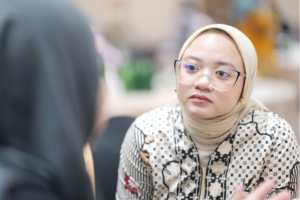
From a small village in Indramayu, Agni has proven that when young women are given the space, trust, and support they need, they are capable of leading the way for change. Agni’s journey with Selendang Puan, SAPA Institute, YGSI, and the RHRN2 program serves as a testament that grand transformations can begin with something as simple as the courage to dream and the determination to act. (*)