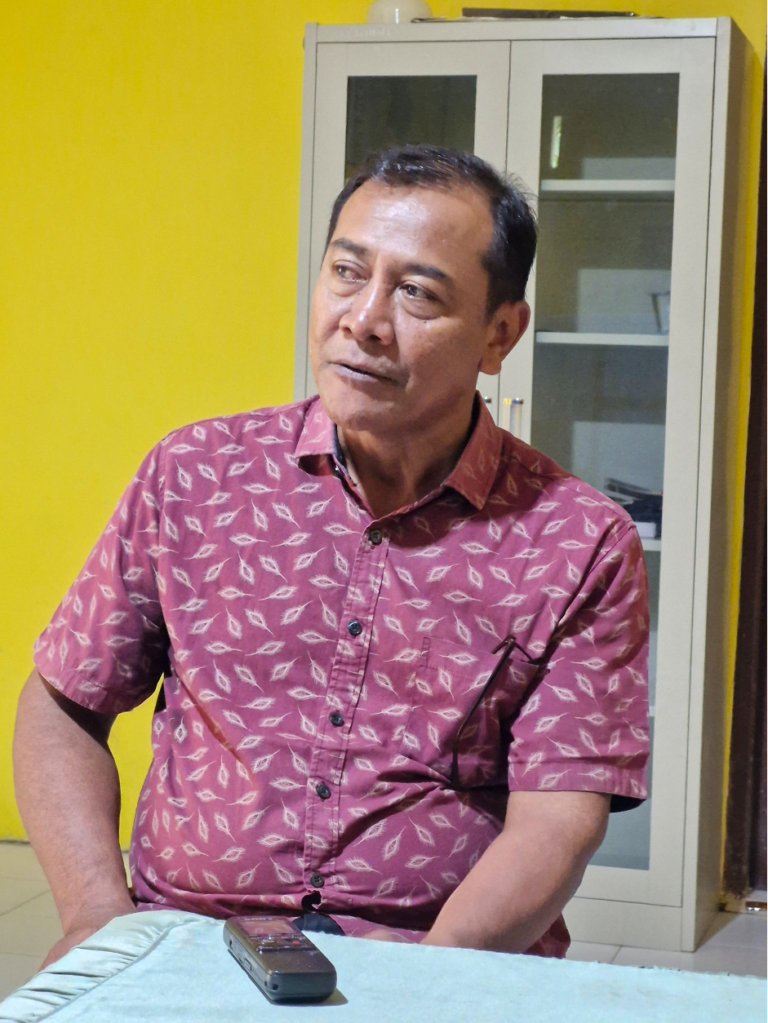
Qomar’s Journey with CIKAL
Qomarun never imagined that he would become involved in issues considered taboo by his community. As a Development Economics student at Pembangunan Pancabudi University, he was better known as a freelance MC, frequently hosting weddings and major events. His life followed a typical path until one day, the neighborhood head of his village contacted him to participate in a discussion regarding Sexual and Reproductive Health and Rights (SRHR) organized by the Aliansi Sumatera Bersatu (ASB) through the Right Here Right Now 2 (RHRN2) program.
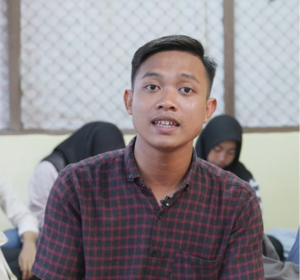
Qomar initially hesitated. To him, discussing SRHR was rare in his community and even considered taboo. “What is the benefit? What will people think?” he wondered. However, curiosity eventually pushed him to attend.
During his first discussion, he felt awkward. But as time went on, he began to understand that SRHR is not just about reproductive organs or “sensitive” topics. The issue is far broader, encompassing youth rights, self-protection, and awareness of dangers such as gender-based violence, sexual exploitation, and child marriage. This was the moment his awareness began to shift.
Finding Meaning Behind the Numbers
While participating in discussions with CIKAL—a youth community formed through the ASB program—Qomar began to see a reality that had been hidden in his village.
Langkat Regency, where he lives, turned out to be one of the regencies with the highest rates of sexual violence in North Sumatra. Almost every day, there were reports of molestation, online gender-based violence (OGBV), child marriage, or teenage pregnancies. Even in his own neighborhood, he witnessed firsthand how his peers became trapped in difficult situations due to a lack of education and protection. From this, Qomar realized: the issue of SRHR is not just a theory. It is a reality that must be faced and rectified.
From Participant to Mobilizer
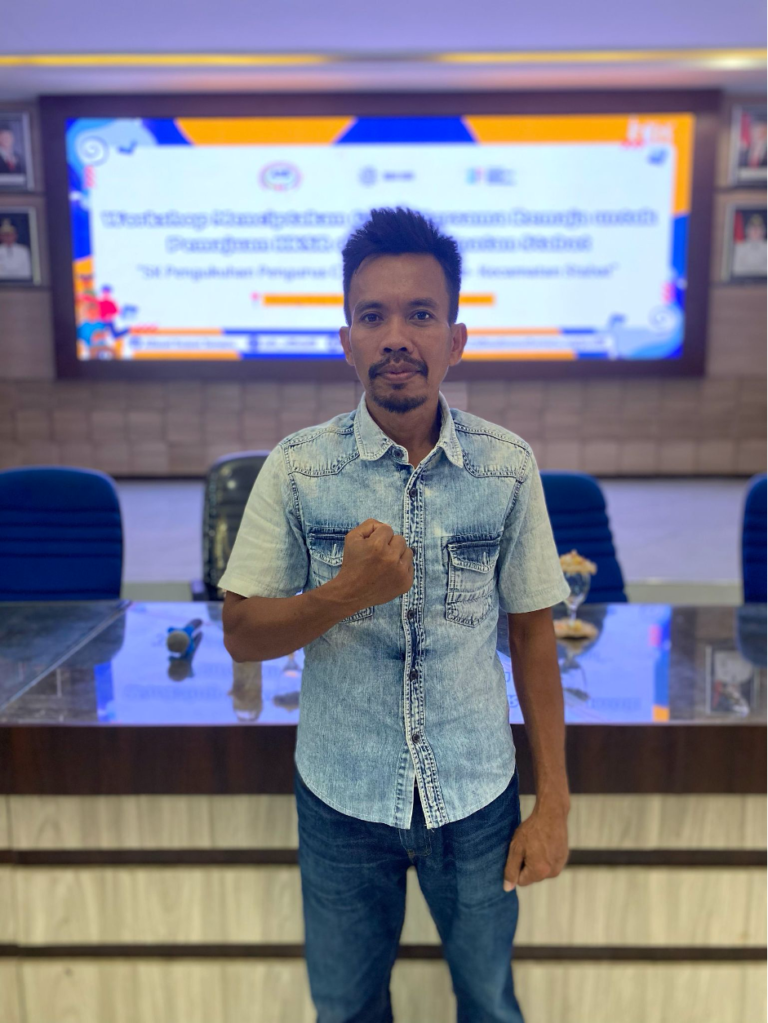
After several months of being active in CIKAL, Qomar was no longer just a participant. He is now the Advocacy Coordinator and the CIKAL Male Ambassador, playing an increasingly significant role in disseminating SRHR information to fellow youth.
His task is not easy. He has to face stigma, prejudice, and challenges from a society that still views SRHR discussions as taboo. However, he refuses to give up.
As part of the advocacy team, he even participated in drafting the Regional Regulation (Ranperda) on Reproductive and Sexuality Health Education in Langkat Regency. From merely attending discussions, he has transformed into a youth representative in policy formulation that will have a broad impact on the next generation.
“Initially, I only came because the neighborhood head asked me to. Now, I feel I have a responsibility to ensure my friends get the protection they deserve,” he said.
Personal and Family Transformation
The journey with CIKAL did not only change his perspective on the outside world but also on himself and his family.
Previously at home, the division of household chores was based on gender stereotypes—housework was seen as a woman’s responsibility. However, after delving into SRHR, Qomar began to understand that equality starts at home.
Now, he does not hesitate to help with household chores. He also better understands the importance of boundaries within the family, such as the awareness that brothers and sisters should not share a bedroom, and that every individual should have equal space and rights within the family.
More surprisingly, his family—who were initially skeptical of his activities—now support him fully. They have begun to see that what he does is not a negative thing, but something vital for the future of the youth in their village.
Becoming a Voice for Other Youths
Now, Qomar does not only focus on education in his village. He is active in various national forums and meetings. One of the most memorable moments for him was attending national meetings in Bogor and Jakarta, where he shared experiences with young people from various regions across Indonesia.
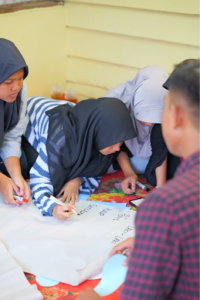
He is also involved in various creative campaigns, including the Youth and Children’s Festival, where art and creativity are combined with SRHR education. At this festival, young people showcase their talents in music and dance, featuring lyrics and choreography that carry educational messages about SRHR.
Additionally, he helped establish educational booths during the Langkat Regency Anniversary celebrations. These booths did not just display local SME products but also hosted information sessions and small discussions on sexual and reproductive health.
English Translation
A Legacy of Change for the Next Generation
Although CIKAL’s journey is far from over, Qomar is confident that change is already beginning to take root. Teenagers in his village are now more courageous in discussing their rights and more aware of the importance of SRHR education. Furthermore, the government has begun involving young people in policy formulation—such as in the Development Planning Consultations (Musrenbang)—and the community has become more open to SRHR discussions, despite the remaining challenges.
However, one concern still weighs on his mind: the ASB program and funding from RHRN2 are only scheduled to run until 2025. “We’ve started to think: what happens when this program ends? How can we keep moving forward?” he asks.
To anticipate this, Qomar and the CIKAL team have begun building networks with organizations outside of Langkat, including the Generasi Anti Kekerasan (GAK) (Anti-Violence Generation), in hopes of strengthening their advocacy and seeking support from new funding sources.
For Qomar, this journey is not just about himself. It is about ensuring that the generation after him no longer faces the same ignorance and injustice.
“I used to think talking about SRHR was taboo. Now, I know that staying silent is the biggest mistake. If we aren’t the ones to speak up, who will?” (*)