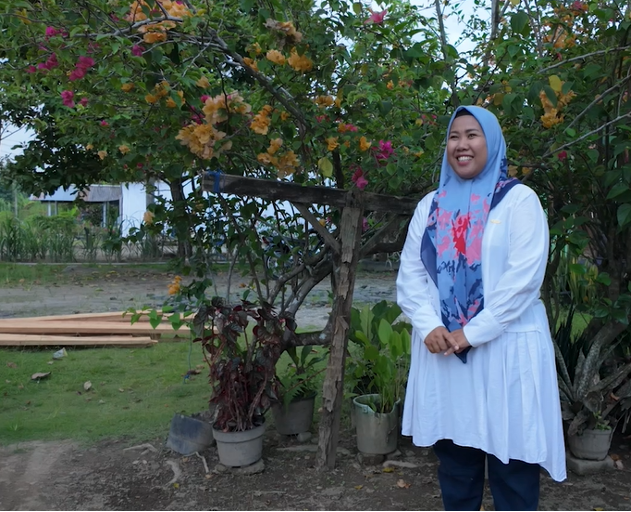
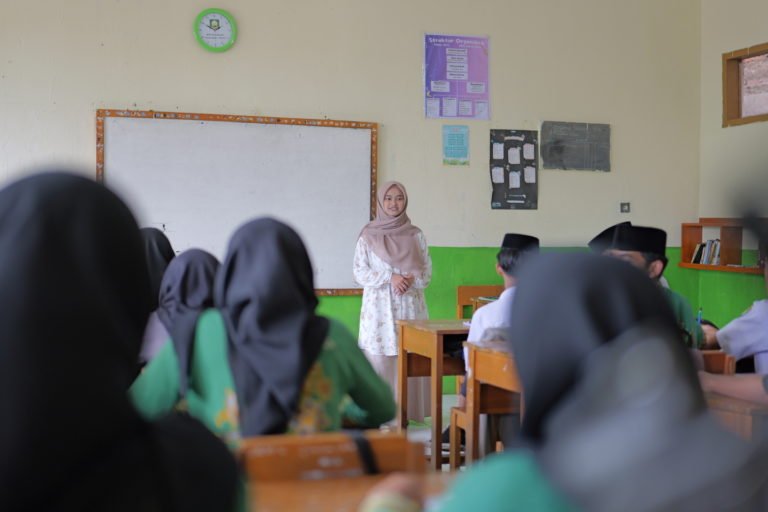
Syarifah grew up in an islamic boarding school whose religious values are deeply rooted. From an early age, she was accustomed to living under strict rules, often regarded as sacred and beyond question. The world around her seemed secure under the enforcement of these norms. Yet there was a more complex reality that demanded closer scrutiny.
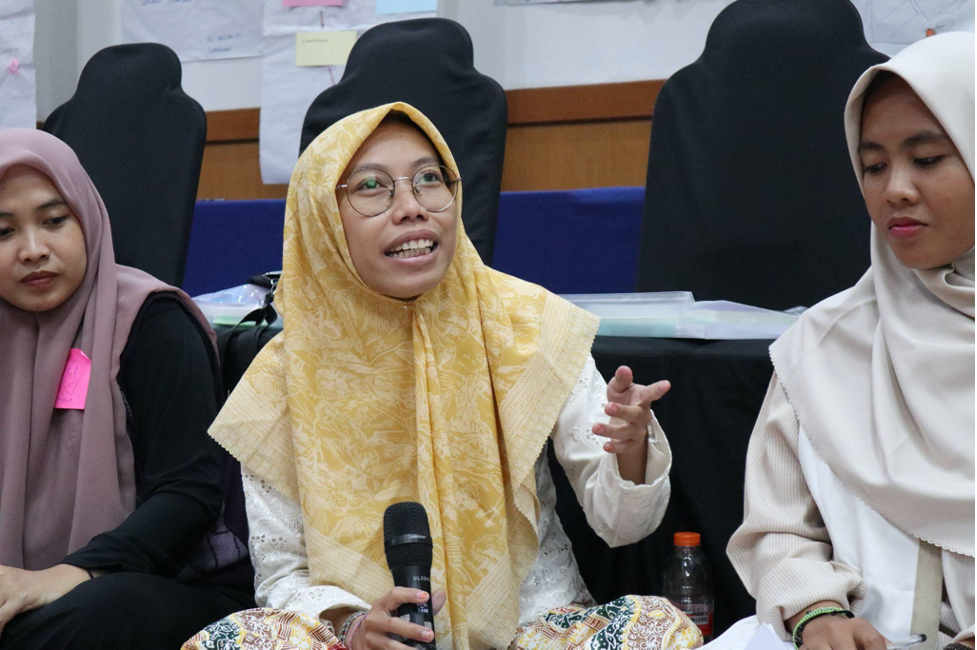
“I used to think that boarding at a pesantren was a safe space. But in reality, there are so many sexual and gender-based violence (SGBV) cases that arise, and they are often treated as if they are normal,” she said quietly, yet firmly. SGBV are not unfamiliar issues, but they are frequently overlooked. Religious interpretations were sometimes used as a justification rather than as a means of prevention. Hence, she refused to remain silent.
Syarifah is known as one of the more progressive young female ulama in her region. She combines a deep understanding of religious texts with strong social awareness, particularly on issues concerning women and gender justice. Her courage to reinterpret teachings without losing their traditional roots has positioned her as a vital bridge between the world of santri and broader social movements.
Starting with Dialogue, Nurtured by Courage
Community activities became a space for Syarifah to voice the concerns she had long held back. Through her involvement with Rahimah, she and her peers began formulating a Follow-Up Action Plan, one of which was the idea of developing Standard Operating Procedures (SOPs) for the prevention of violence in pesantren
Together with Pak Uli, a lecturer well-acquainted with islamic boarding school, they worked to bridge dialogue between young people and kyai. It was far from easy. “The challenge? Violence is often seen as normal, or even sanctified through misguided religious interpretations,” Syarifah explained. Yet she remained firm in her belief that religion should never be used to legitimise violence.
Reinterpreting religious texts through the lens of reciprocity, compassion, and justice is no simple task. She recognises that legal frameworks, such as the Law on the Crime of Sexual Violence, are indeed important. However, within islamic boarding school contexts, approaches grounded in classical texts and religious arguments are essential. “In universities, we can simply refer to the law. But in islamic boarding school, we have to begin with dalil and hadith.”
Mobilising the Community, Sustaining the Movement
For Syarifah, a significant turning point came when her concerns were no longer considered taboo within community discussions. She does not see herself as a hero, rather, she emphasises the crucial role of the community. “It was a mutual response. The concern had already been there in the first place, but no one had simply taken the initiatives,” she said.
Some islamic boarding schools teachers were former university peers of the community facilitators, creating emotional and spiritual connections with Syarifah. When she introduced the idea of establishing SOPs, they did not reject it. Instead, they felt supported and connected. “In truth, they share the same concerns. They just didn’t know where to begin,” she explained.
The development of these SOPs is intended not merely as a formal milestone, but as a step towards transforming the broader culture of pesantren. Violence is no longer treated as something usual. Well-structured mechanisms of prevention, reporting, and support have been established, with monitoring efforts also embedded within the procedures. “Without oversight, things would simply remain stagnant. There would be no progress,” she noted.
Building Context-Sensitive Procedures for Islamic Boarding School
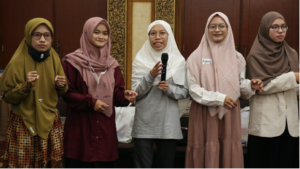
Despite these achievements, Syarifah emphasised that this model cannot be applied entirely to other islamic boarding school. “Even within Indramayu itself, different areas have distinct characteristics,” she said with a light laugh. Each setting carries its own nuances, and every community is shaped by different interpretations and social structures.
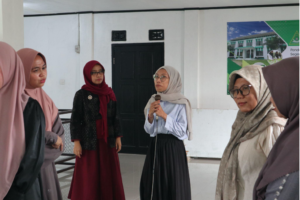
Syarifah betul-betul memikirkan dengan serius bagaimana perjalanan SOP diterapkan di pesantren. “Yang penting itu keberlanjutan dan monitoring. Bukan hanya bikin SOP lalu selesai.”
The Enforcement of Sexual Violence SOPs in Islamic Boarding Schools Is No Longer a Mere Aspiration
Syarifah’s story reflects a broader cultural transformation within the Babakan Islamic boarding school community in Indramayu, an area long known for its traditional and conservative values. The development of Standard Operating Procedures (SOPs) for the Prevention of Violence in this environment has not only reshaped public perspectives on gender and sexuality issues, but has also paved the way for more equitable and compassionate interpretations of religious teachings toward women and children.
This transformation has been made possible through the support of Yayasan Gemilang Sehat Indonesia (YGSI) under the Generation Gender (Gen G) programme, which has provided not only space and capacity-building initiatives, but also fostered a supportive ecosystem grounded in mutual empowerment. (*)