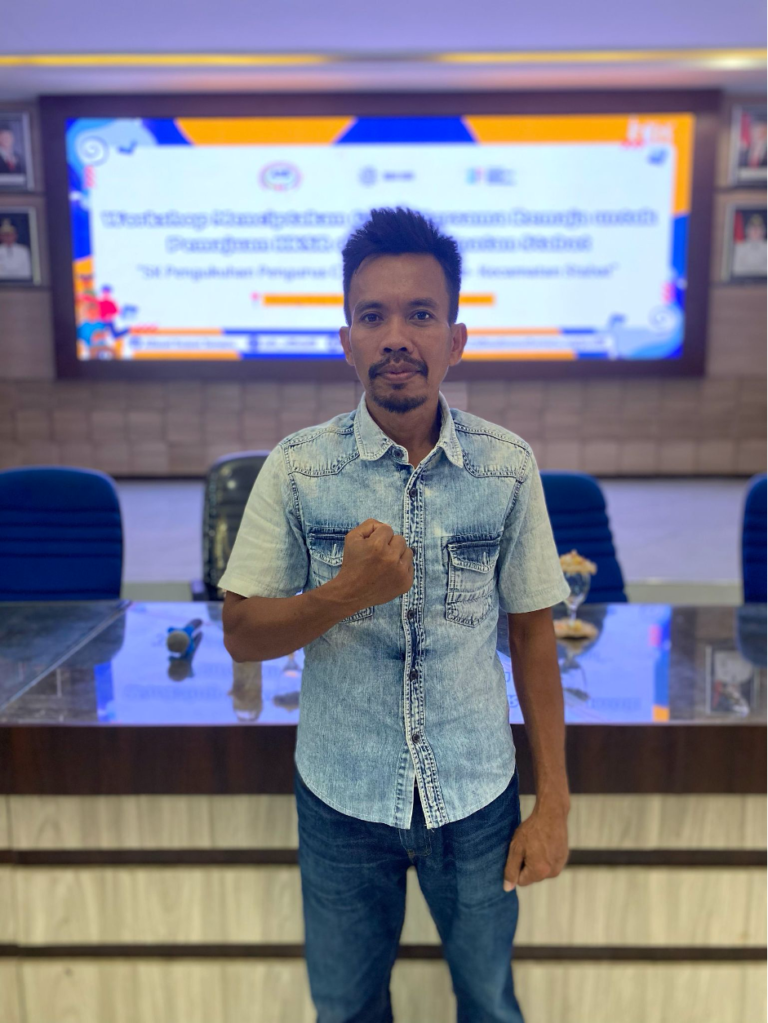
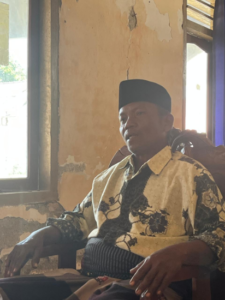
At the foot of the hills of Pengengat Village, Central Lombok, the wind carries the voice of a figure who does not merely guard ancestral heritage, but also reshapes its values for the sake of the village children’s future. He is Lalu Wirtabe, the Chairman of the Pengengat Village Customary Institution—a traditional leader who refused to remain silent while witnessing children drop out of school to marry at a young age.
This is a powerful narrative of cultural evolution led by grassroots leadership. Here is the translation into English, maintaining the emotional weight and the cultural nuances of the story.
English Translation
“When I see a young child drop out of school, my heart aches deeply,” Pak Lalu says, his voice heavy yet filled with compassion. In his twilight years, he is not merely a guardian of tradition, but a protector of the younger generation against harmful norms that were once considered ‘commonplace.’
Reinterpreting Customary Law
As a customary figure, Pak Lalu does not deny the existence of the Merarik (elopement) tradition in Sasak culture. However, he emphasizes that many have misunderstood its meaning.
“In the past, Merarik wasn’t actual ‘theft.’ A girl was taken at night, and by morning, an envoy arrived to formally propose. But now, it’s used as an excuse to justify early marriage. That is not the essence of the custom,” Pak Lalu explains.
He invites other customary leaders to “re-read” their traditions—to look back at the core essence and the moral values behind them. Together with his colleagues, he initiated five customary recommendations to prevent the practices of merarik salah tandah (inappropriate behavior), salah waya (wrong timing), and underage merarik.
He boldly states, “Customary law is not just tradition; it is a protector of the community. If implemented correctly, it can prevent divorce, violence, and child marriage.”
Tradition as a Social Fortress
Pak Lalu realizes that change must come from within. He organizes socializations during Yasinan (communal prayer) forums and visits hamlet after hamlet, without waiting for funding or official invitations.
“Customary law is the heaviest because it is the community itself that punishes. There is shame. That is what creates a deterrent,” he says.
He emphasizes that many children marry young due to the impact of parental divorce, lax parenting, and poverty. Therefore, he focuses on education, strict supervision, and strengthening the family unit.
“I always tell parents: if your child isn’t home by 11 PM, don’t just sit there. Find them! Do not let it slide,” he says firmly.
Pak Lalu has even turned his home into an informal consultation center. He does not hesitate to advise young families in conflict, ensuring that divorce does not rob their children of a future.
Support from Power to Youth (PtY) and YGSI
This change did not happen in a vacuum. Through the Power to Youth (PtY) program implemented by the Yayasan Gemilang Sehat Indonesia (YGSI), Pak Lalu—along with customary leaders from four villages in Lombok—participated in a series of meetings, discussions, and training sessions.
“From there, we realized that many customary rules that were once good had been misinterpreted. We agreed that something had to change. And that change must start with us, the customary leaders,” he says.
One result was the revival of the Belako tradition—a formal proposal process that prioritizes family blessings and the readiness of the couple, as opposed to elopement practices that often blindside the bride’s family.
YGSI and PtY provided a space for the voices of customary leaders to be heard across villages and generations. Pak Lalu has become more than just a symbol of change; he is an agent spreading new values.
“Our Children, Everyone’s Children”
For Pak Lalu, the children in his village are a collective responsibility. “They aren’t just my children. They belong to all of us,” he says repeatedly, as if it were the mantra of his struggle.
His own daughter is now 26, unmarried, and building her career. He wants all children in Pengengat Village to have the same opportunity—to go to school, have a career, and dream big.
“If we don’t fill these children with the ink of goodness, they remain empty. It is we who must begin writing it,” he says with a sharp, determined gaze.
The Customary Leader as an Actor of Change
Amidst the whirlpool of culture and changing times, Pak Lalu proves that customary leaders are not merely guardians of the past, but deciders of the future. With his calm yet influential voice, he serves as a bridge between tradition and transformation.
This journey is not yet over. But with consistent small steps, Pengengat Village is rewriting the narrative of tradition, children, and the future. (*)